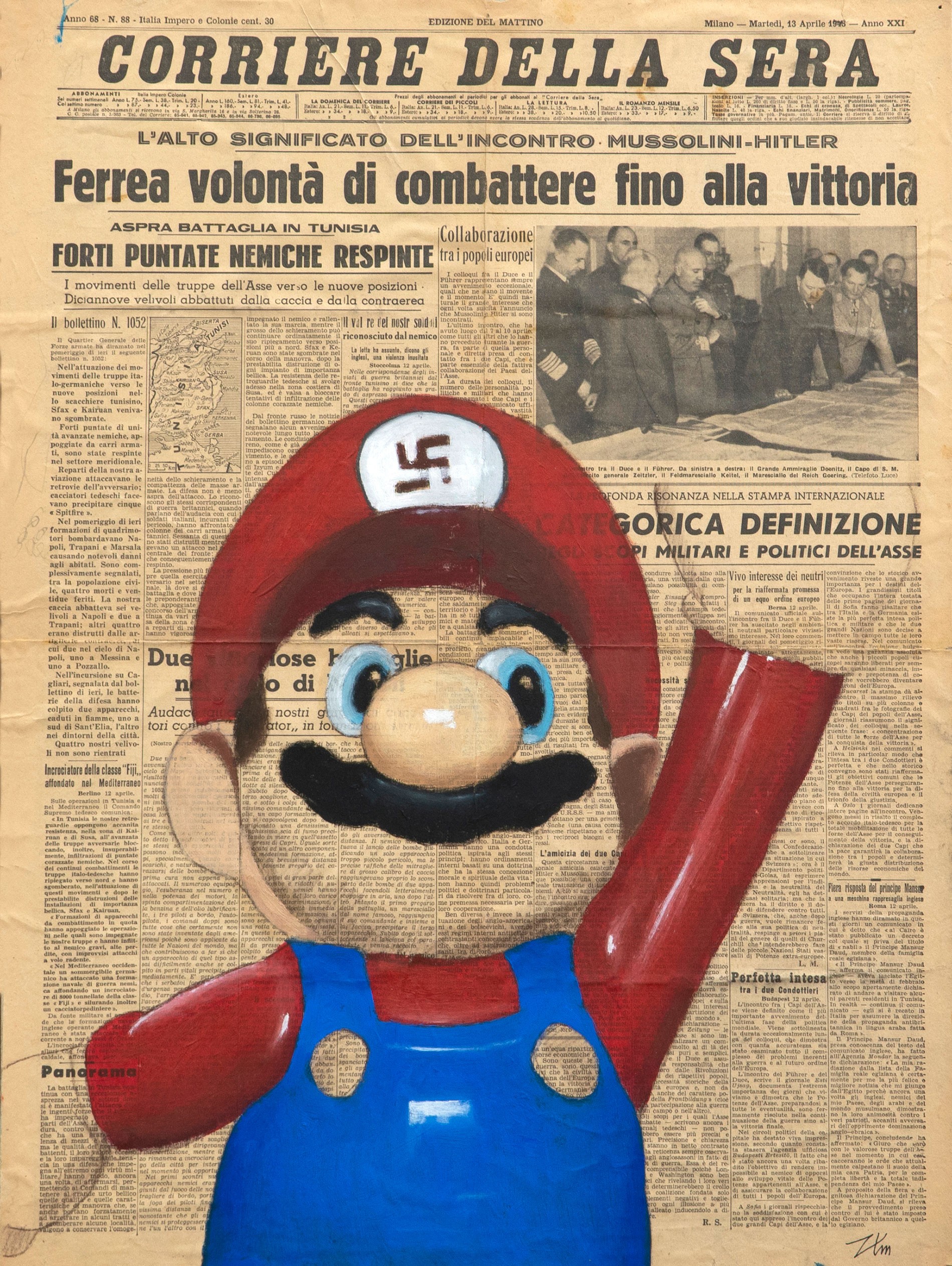
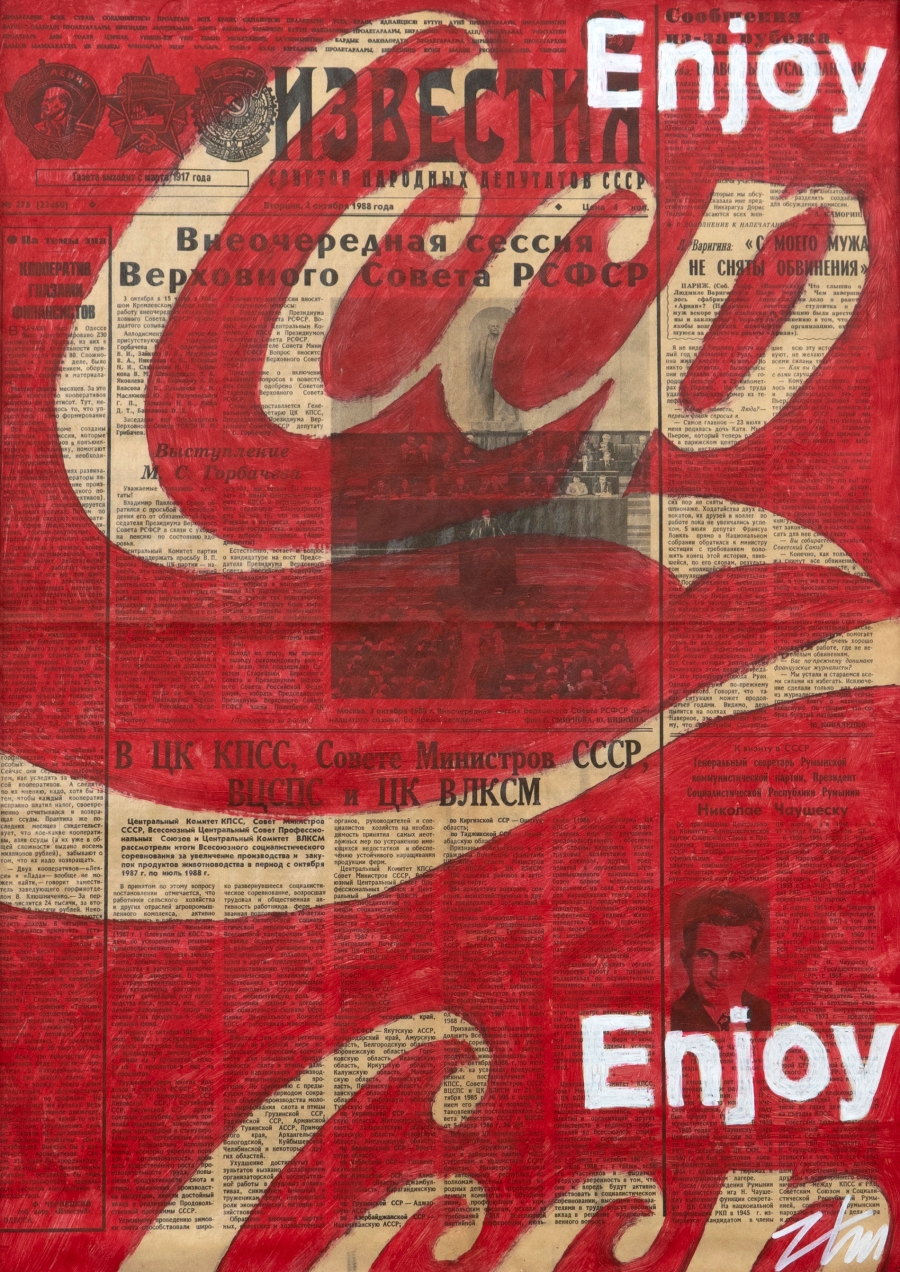
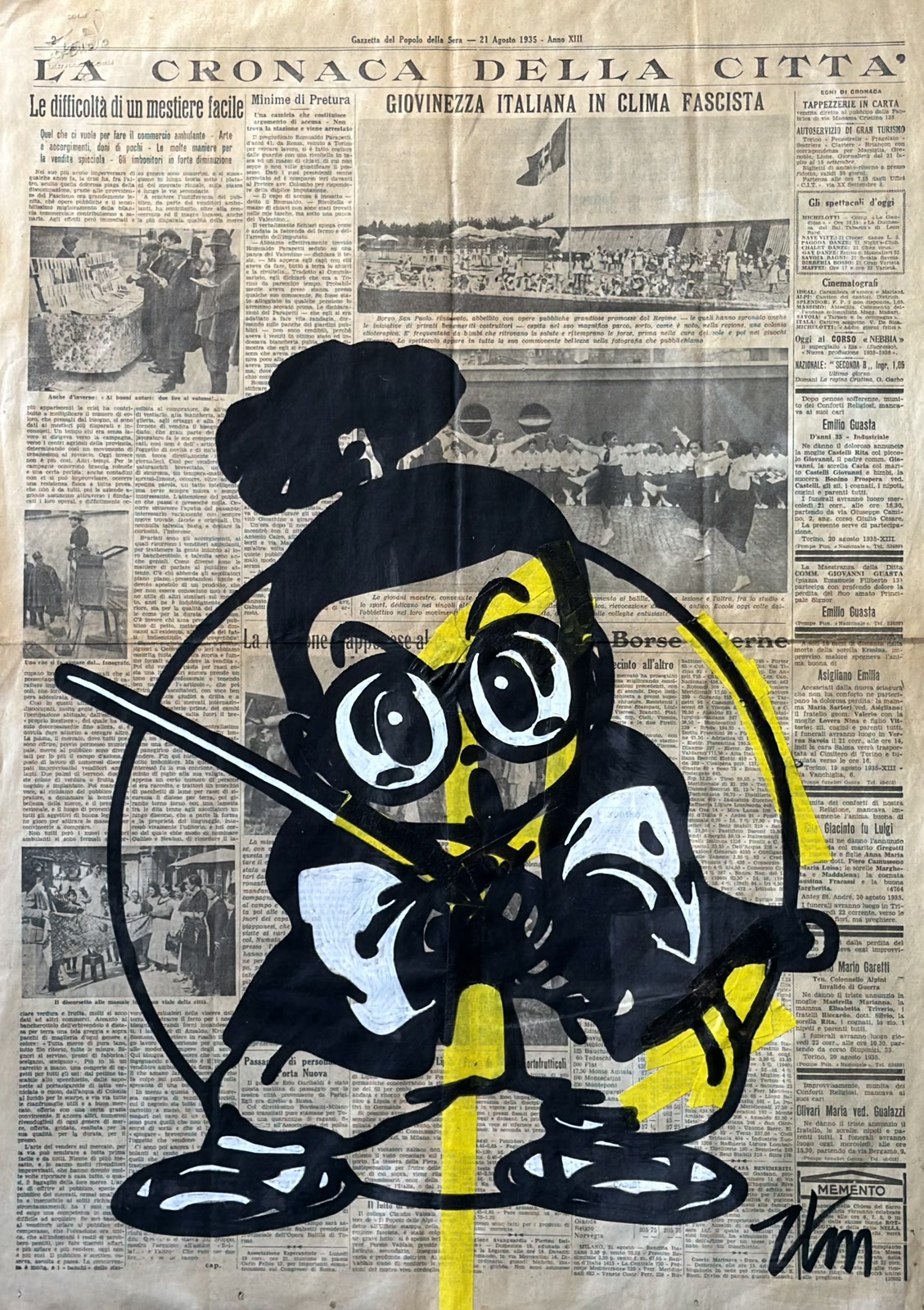
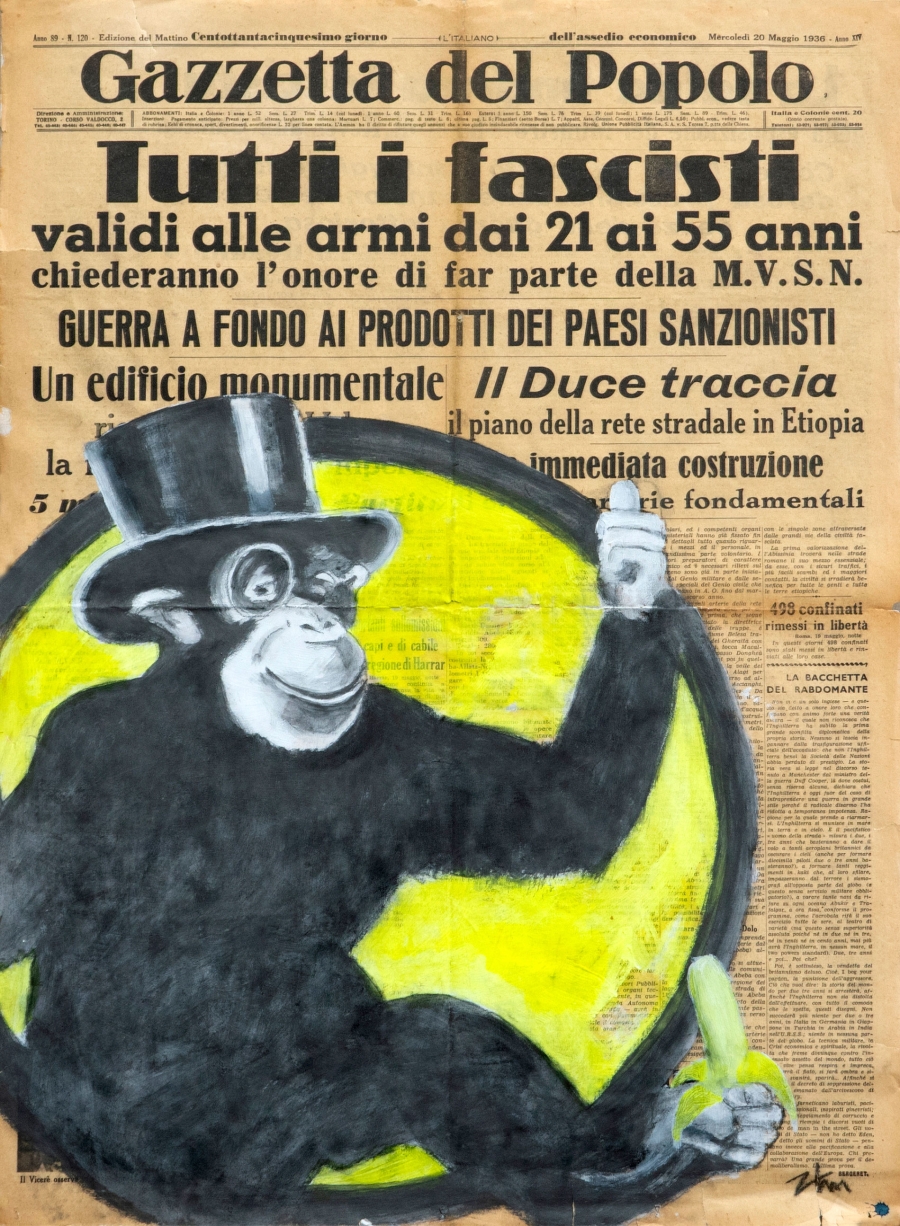
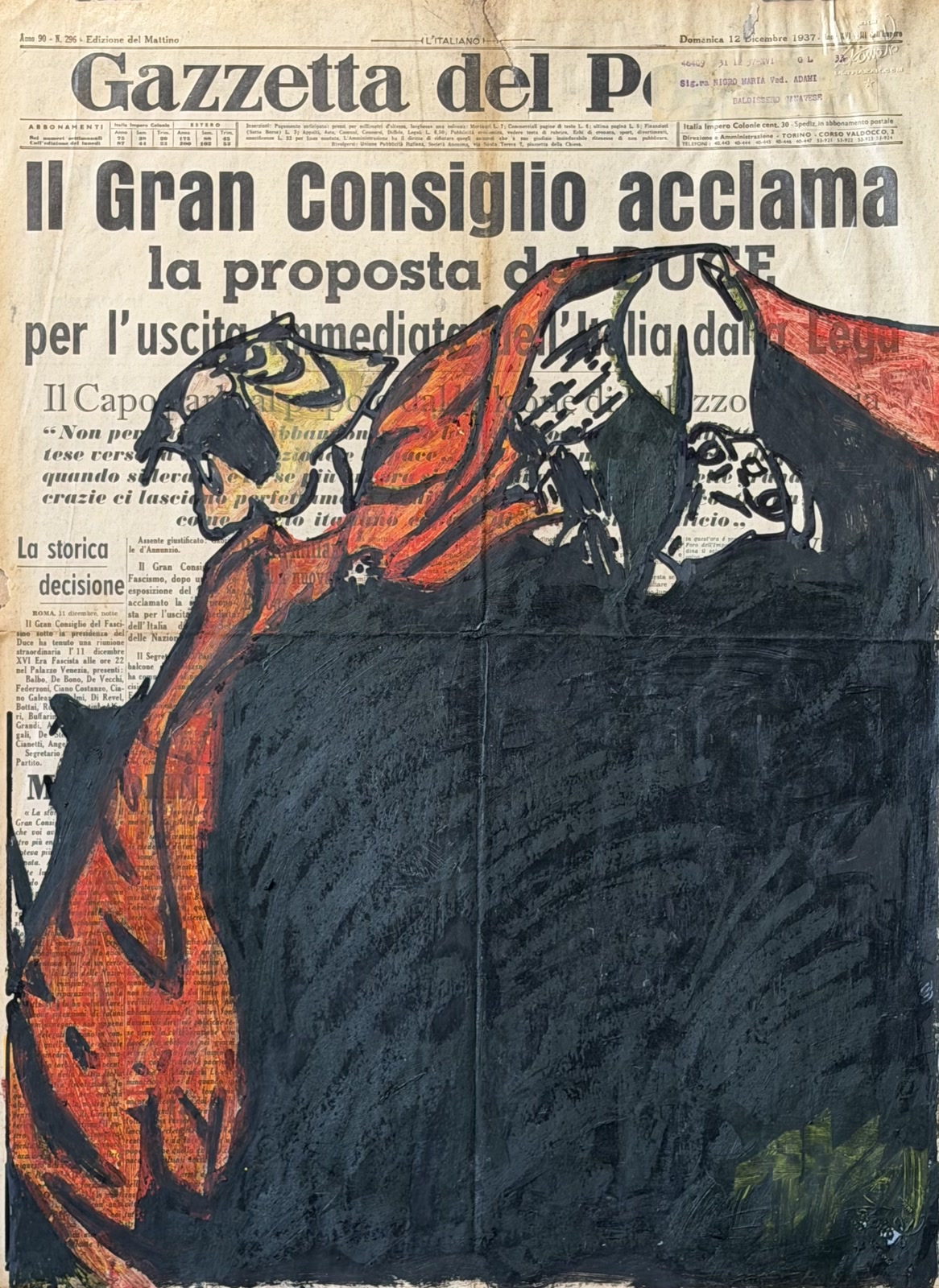
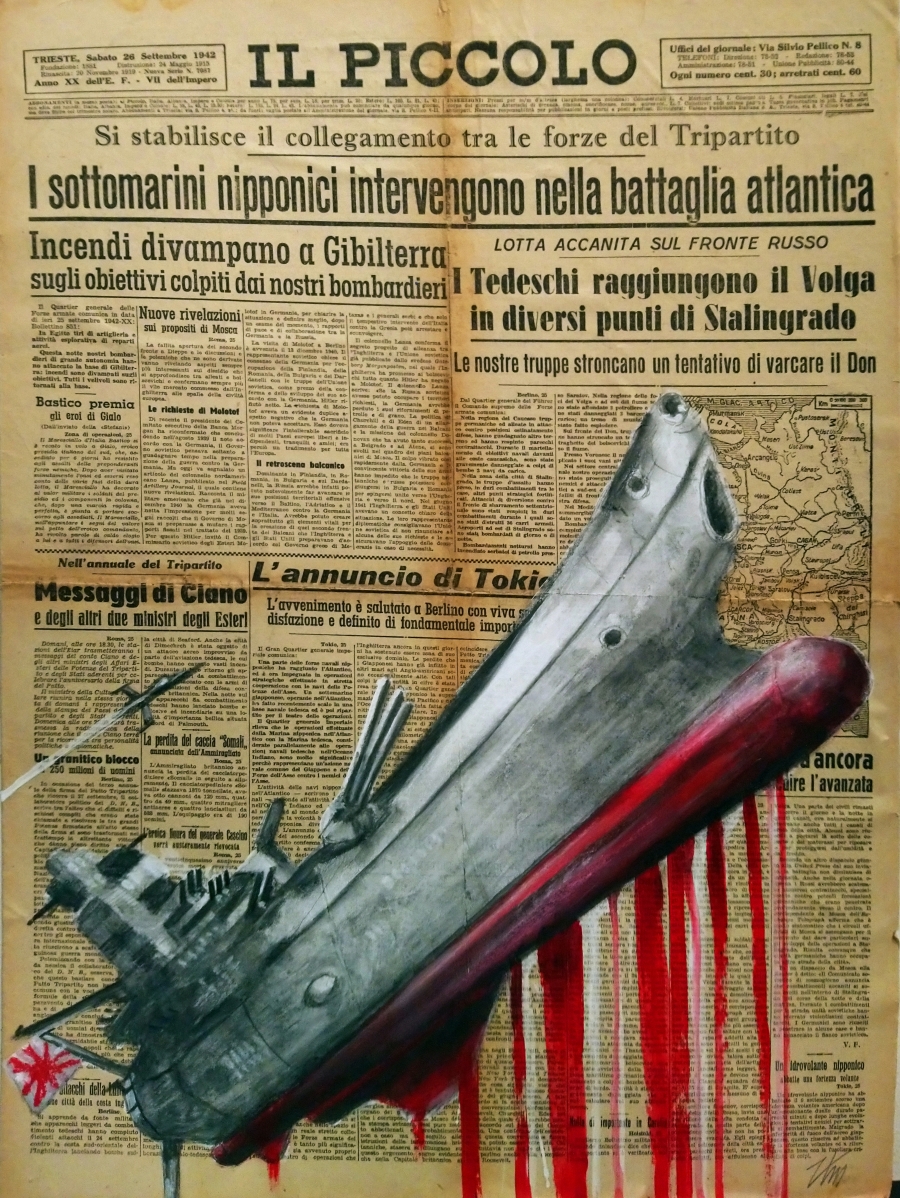
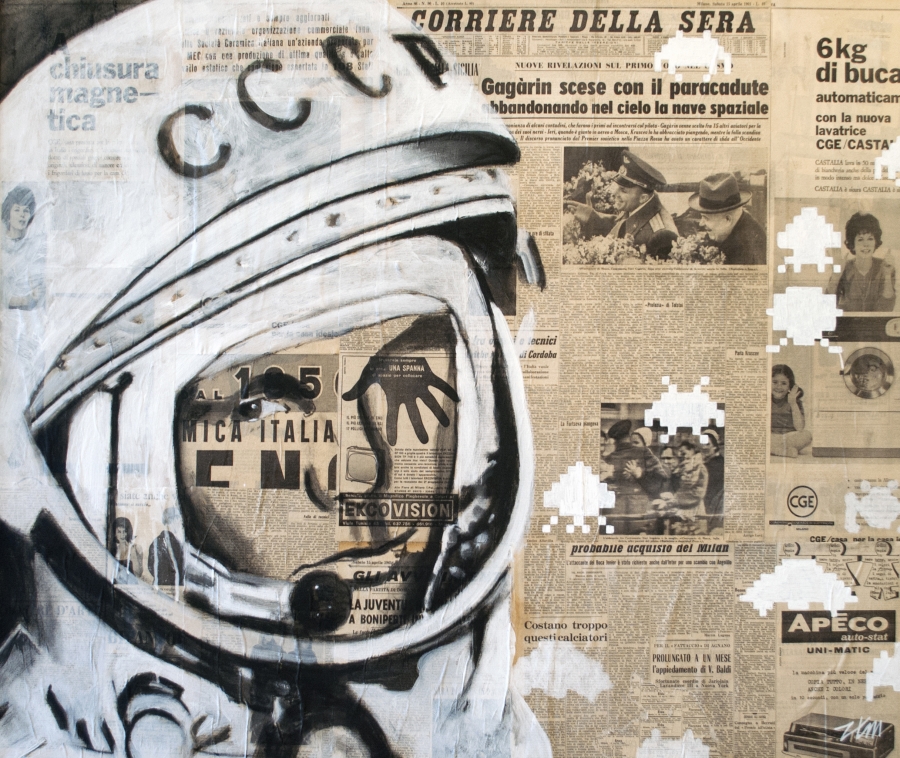
"Tearing up a daily newspaper is the only way to free oneself, at a stroke, from thieves, murderers, swindlers, apostles and catastrophes"… This quotation from the poet Guido Ceronetti fits Zakamoto's works perfectly: he manages to transform dramatic headlines, generally set in huge type, into visions full of humour, capable of drawing a smile from us and at times a real laugh.
Introduction by F-Xavier Bernard,to the catalogue of exposition MEDIAMENTE FALSO by M.Zakamoto.
THE GREAT SIGNIFICANCE OF THE MUSSOLINI-HITLER MEETING
FIERCE BATTLE IN TUNISIA. STRONG ENEMY THRUSTS REPULSED. The movements of Axis troops toward the new positions in the executive valley took place according to the pre-arranged plan. In carrying out the movements of the Italo-German troops toward the new positions, Sfax and Kairouan were being evacuated. Strong enemy forward thrusts, supported by tanks, were repulsed in the southern sector. Units of our air force attacked the enemy's rear areas; German fighter pilots brought down five Spitfires. Nineteen aircraft were shot down by fighters and anti-aircraft guns.
Formations of four-engined bombers attacked Naples and Trapani, causing damage to the built-up areas. Among the civilian population, a total of four dead and twenty wounded have been reported. Fighters shot down six aircraft over Naples and two over Trapani; another four were destroyed by artillery, two over the sky of Naples, one at Messina and one elsewhere.
In the raid on Cagliari, reported in yesterday's communiqué, the defensive batteries hit two aircraft, which fell in flames, one south of Sant'Elia, the other in the vicinity of the city. Four of our aircraft did not return. A cruiser of the "Fiji" class was sunk in the Mediterranean.
Berlin, 12 April. The Italian and German troops holding the Tunisian positions are offering fierce resistance, having conducted continuous fighting.
The great interest aroused by the meeting between Mussolini and Hitler has been emphasized by the international press. The meeting of the Axis leaders, which took place in an atmosphere of full and cordial understanding, received the greatest prominence in the newspaper commentary.
In Cairo, a decree was published setting out the position of the Egyptian Government. Prince Mansur Daud declared that the Arabic language and its tradition have been the object of an anti-British propaganda campaign, and that the Arab people will no longer accept foreign domination.